
[I started writing this story for submission to Apparition Literary Magazine’s upcoming January issue, the theme for which is “Blight.” When I finished, the draft was about 8,000 words long. I’m currently trying to edit it down to 5,000 to meet Apparition’s submission guidelines, but I’m posting the longer work-in-progress here.]
[CONTENT WARNING: This short story contains discussion of depression and suicidal ideation]
*
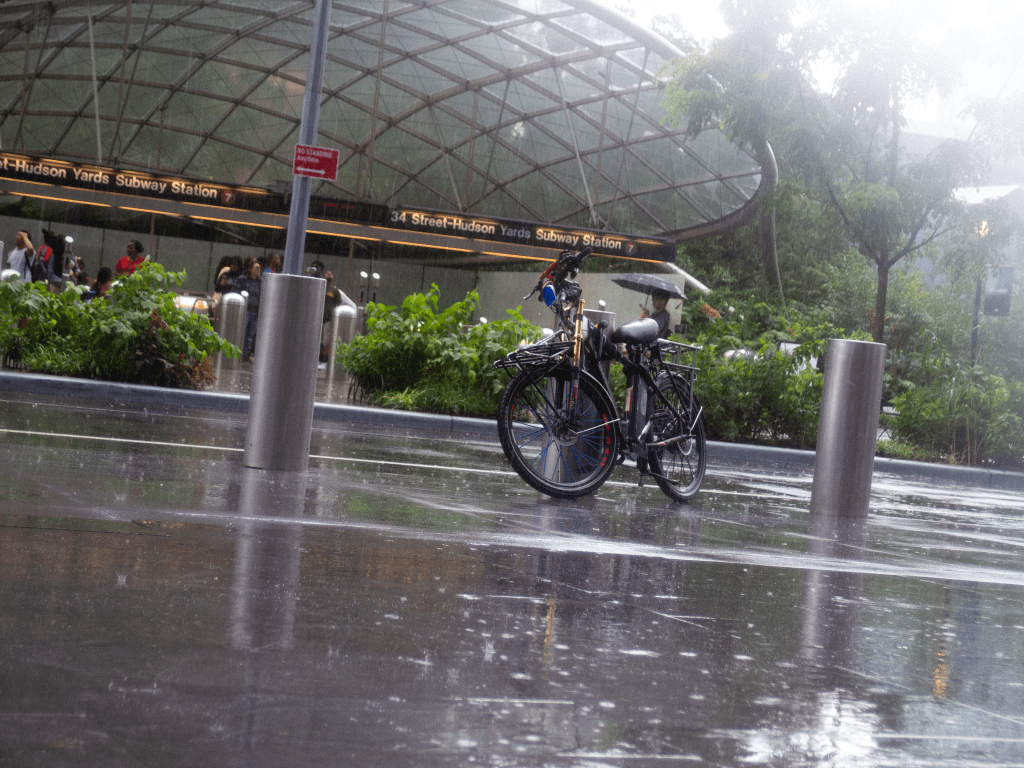
the market hates you
even more
than you hate yourself
Rae Armantrout, “Hate”
*
The joy I experienced when I began to disappear was unlike any other I had known before. For nights on end I had been drenched in strange, upsetting dreams that left me heartbroken throughout the rest of the day, even when all memory of their contents vanished upon waking. My insides would feel hostile towards me on those days, like I was full of jagged shrapnel and any wrong move would result in new lesions. Then, after a week, these sensations finally started fading; and I came to realize that with them I, too, would fade. And I was bathed in absolute exhilaration.
I had been trying to stay measured about it all up until then. I had learned already that a feeling of powerful emotional incorrectness often accompanied the come-down from any significant action. The seventeen days prior had been spent occupying, along with forty-two others,the Student Center building downtown that The University owned. I had never been part of a larger-scale action than that, so I figured my dissoluteness was only natural. We had converted visitors’ suites and dorm bedrooms into medical wards, meeting rooms and barracks, and I had been stationed at the perimeter for continuous 48-hour shifts to monitor police activity and anybody else who approached the building.
I often said to my comrades that my body functions better in such situations in long, uninterrupted stints, so the two-day stretches of wakefulness were honestly not a strain on my system. I would go crash in the med ward for a day once relieved of duty and feel rested by the time I was called back out. While I was on, I would avoid eating too much, drinking only enough water that I didn’t have to pee more than once every few hours, and I rarely sat down if I could avoid it. The relief of talking only to convey information – not to try and explain myself or to guess what social convention called for in a particular conversation – was immense. I told people I didn’t mind all this, that I would and was taking care of myself. And when I said this, it was true.
The crashes, though, could be extremely harsh.
*
I felt distinctly lighter the moment I realized that I was beginning to disappear. I don’t think this was just me psyching myself out, it has persisted the more and more I fade. It’s yet to reach gossamer levels, but this feels like the direction in which it’s moving: there and beyond. If and when I simply float away, it will be with such happiness that it will stain the sky. Without a body to contain it, I don’t think you could describe it as “filling” me.
Floating was one of the few non-task-oriented thoughts I allowed myself while along the perimeter. It was a hard thought to ignore, looking down from wherever I was stationed to street level, where flooding had overtaken everything. I almost couldn’t avoid imagining myself floating face-down through the murky waters like the sedans and trucks that were carried away when the storm first started. Bodies floated by far too often already, most so waterlogged as to be unidentifiable. To imagine myself among them, especially after my nervous system had been on high alert for so long, was almost calming.
The first floor of the Student Center was mostly underwater as well, of course. Our initial plans had called for the Raytheon and Monsanto Ballrooms to be designated as med wards, but those were already under at least seven feet of water when we arrived. None of us had anticipated the storm. And in the first days especially, medical attention was a high priority. The Medical Team was able to adjust to the second-floor Exxon Ballroom, despite the slightly reduced square footage, with admirable flexibility.
For most of the first five days, almost every patrol would row back in with new refugees. At best, they would be shivering and soaked, but it was a very small number who were that lucky. Invariably they would be clutching an assemblage of salvaged possessions, never everything they wished they could have brought, often not even everything they needed. Medications in particular were at a perpetual shortage. The stockpile that the Medical Team had been able to amass, which covered only a portion of what the people coming in needed, was under continual strain.
I had been on the Security Team since the beginning of the planning process, since that was what my background was in. We shifted to creating a perimeter almost immediately after making sure everyone we were already in contact with – primarily people who had been unhoused even before the storm – had entered the building and were spread out to the rooms we had selected from the floor plans to confirm they were all empty. Students and staff had been evacuated a few days before and the building locked up. We used my ID card to gain access. A few students who had nowhere else to go had remained behind, hiding out through the storm so they weren’t forced out onto the street. They greeted our occupation with a sort of dazed distrust, as if we were just another administration they didn’t want to keep proving that they were worth saving to.
State Trooper boats took a long time to begin showing up, longer even than I had expected them to. The first encounter we had wasn’t with them, but with a Red Cross search boat offering to take people to the stadium on the outskirts of town that had been converted into emergency shelter. Our police liaison, who had been the one to engage before we knew who was on the boat, communicated the offer to everyone at the occupation meeting that evening. The only takers were two of the students and a couple of people who needed medication that we didn’t have, although we couldn’t confirm that the stadium would have access to them either. Everybody else elected to stay, even the refugees who hadn’t been part of the planning process, more comfortable in the uncertainty of how we would fare than in the certainty that the system they would be shuttled through if they left would be unforgiving.
*
Only I think about money
And often I feel like dying
Phrases like this were the way I knew I was disappearing.
The disappearing process is difficult to describe. The steps and effects of the process itself are communicable, but how I knew they meant I was disappearing is less so. As I said, it began a week after the occupation had been ended, a week after I had put on work clothes (damp from being in the unattended closet of my apartment during the storm, but luckily still wearable since I lived on the third floor) and gone back to work at The University. I fully anticipated that I would be arrested or fired or something worse immediately upon getting to campus. And then, shockingly, I wasn’t.
I read somewhere – I think in “Secondhand Time” – about the way people who had government jobs in the Soviet Union felt the day after the government collapsed. They described an almost embarrassed inability to figure out anything else to do other than just go to the office and get through the day, trying not to make eye contact with anybody else lest the elephant in the room demand addressing. Trying to just get to the end of their time on the clock so they could go home. Which they did. When I read this, it struck me for how similar it sounded to the way work always feels. But I didn’t understand it in my bones until I went in that first day after the occupation, ignoring the instincts that told me to just stay home or skip town or do anything else because I wasn’t sure what the next step in a plan like that could be for me. I had no money, half of my belongings had been stolen out of my apartment during the time when I was in the occupation, and my car had been carried away to who knows where by flooding. So I got on the boat that was filling in for public transit, rode to campus, and sat in classrooms or in the library all day going about things as I had before and waiting for somebody to turn around and point me out as a criminal to the State Troopers who were now ever-present during the continued disaster cleanup.
But the disappearing – I keep getting sidetracked.
I have, for almost as long as I can remember, had difficulty sleeping. I know now that these are fairly typical anxiety symptoms, but for most of my life I wasn’t sure why my mind would begin racing the moment my head hit the pillow, obsessively reviewing conversations I had throughout the last day or decade to find faults and gaffes I knew must be there. In those stretches, my nerves would jangle at the slightest sound from my environs, and I would pass nights in semi-sleeplessness, waking miserably at odd hours from dozes I didn’t remember falling into.
To combat this, I developed a method. Phrasing it like that makes it sound more intentional than it was, maybe; rather, a method began occurring. Over and over in my mind, whenever I could feel it about to begin casting back for old fears to unearth, I would begin repeating one of a series of short, punchy phrases, almost like mantras:
I hate myself
I want to die
He shot himself
He killed himself
Repeating these phrases was like taking two-sided sandpaper to the pointed edges of my thoughts: it hurt to hold, especially as tightly as I had to, but it also wore down what else was hurting me enough that I could eventually sleep. This became my ritual, enacted many nights over many years, and when more developed phrases began occurring to me in the painful weeks following the occupation, I was able to recognize them for what they were. Their roughness was familiar to me.
*
I don’t believe in the idea of building the new world in the shell of the old. Not everyone involved in the occupation agreed with me on this – and of course that could be a source of tension at times – but I think the “old” (current) world is much more than just a shell. Saying it like that makes the builders of the new world sound entirely separate from the old, which we aren’t. I am shaped by the world, and it shapes and reproduces itself through me. If who I am were separable from the “old” world, I wouldn’t want the things I want. I wouldn’t think the way I do. This miserable world and I – and you, and we – are co-constitutive. If it were only a shell, we wouldn’t have needed a security team in the first place.
Keeping watch around the building took eight people at any given time. The basement and loading dock entrances being fully submerged lightened the load by four people from what we had planned. We used the slack to shorten half of the team’s shifts to 24 hours, which is probably what ended up saving those of us who got out.
I volunteered to stick to the originally-planned 48-hour shift schedule. My comrades were appreciative, but at moments seemed worried. I think I had more experience in this work than most of them. They were all very kind about it, and I received consistent reminders to drink water, to take breaks if I needed it. At worst, I would worry that they thought I was trying to be tough or demonstrative. I didn’t know how to explain to them that to do this work, for me, was to point as much of myself as I could towards situational awareness, exterior to myself. That I felt privileged to be in a position where I could do that in the first place, and so had to keep doing it, to keep making myself useful. To extract myself from that state took enough time that “breaks” weren’t really feasible, and I worried, on some secret level, that I enjoyed the simplification that such a utilitarian headspace brought with it. So instead I just told them that I would be okay and kept going.
Our goal was to keep State forces, when they did show up, from entering or retaking the building for as long as possible. Our rule of engagement was that we would not escalate first. We would remain peaceful as long, and only as long, as they did. Meanwhile, the Governance Team was attempting to formulate both a list of demands and an equitable, democratic method of arriving at them as a collective with all the members of the occupation who wanted to be involved. They met at least once every day in the Ambassador’s Suite on the 24th floor, usually for hours on end. This was not work I felt equipped to be a part of and I never had time to attend the meetings where it went on anyway, but I tried to keep in mind that the work I was doing made the necessary space for that more important work to go on.
*
Everything hurts
And I am trying to be in hiding
One day I will reemerge and be okay
When life is no longer worth living
*
None of us were under any illusions that all this was going to last when we were planning. This sort of occupation was only sustainable for so long, and the fact that we even made it for over two weeks is probably attributable in large part to the unforeseen disaster circumstances. Even the goal of generating (no, not “generating,” writing – a point some in the Governance Team insisted on. Generating is something a program does, writing is something people do) a list of demands was an acknowledgment that the power of the State to do the necessary repair work was greater than our own, and by implication that it was a power back to which we would eventually have to submit. There was considerable controversy about this attitude, but plans were dutifully made in preparation for the occupation being broken up nonetheless. Plans which included as much stall time as possible to get at-risk occupiers out in as discreet a manner as we could, but which did not, in their initial conception, include doing the same for me.
I had been part of the initial drawing up of the GTFO plans (they had some other, more official name for it, but that was what we all called it), but they’d been crafted on the assumption that the loading dock on the basement level would be a viable exit strategy. It had been clear since day one that they would need to be redrawn. What I wasn’t expecting was that, on day thirteen – one of my off days – a member of the Governance Team would visit me in the med ward to tell me they had already reworked the plan.
“You didn’t have to do that,” I said. I was still just waking up. “I could’ve at least helped.”
Her name was (is, I’m sure, though I haven’t heard from her since) Natalie. Unlike me, she had no official affiliation with The University. I only knew her through doing this work together; I knew nothing of her life outside of it. “You’re busy,” she said. “And we know you have a lot going on without having to think about this during recovery time. So we voted to do a first draft revision and then run it by you.”
Given that I was struggling slightly to prop myself up in bed, I could understand where she was coming from. But my overwhelming feeling was of having distracted from the more important work her team was supposed to be doing by not having started rewriting the plans on my own already. I don’t know if this was somehow visible, but before I could attempt to express it verbally, Natalie went on.
“You’re allowed to rest,” she said. “You’re allowed to need rest. And you do need it, whether or not you’re allowed.” She pursed her lips as I tried to think of what to say. Her tone was flat, but I couldn’t shake the feeling that she was annoyed with me. It was then that I noticed how heavy the bags under her eyes were. “That’s part of what this is all about.”
Her voice softened somewhat as she stood to go. “You can let me know what you think of the revisions tomorrow once you’ve had time to look at them. There’s a Governance meeting tonight at 7 you should come to, if you’re feeling up to it.”
I did not feel up to it. I slept almost straight through until the next morning. Unlike after the occupation, my sleep inside the Student Center was always dreamless.
What happened the next day should’ve been the first indication that the occupation’s days were numbered. Anika – another member of the Security Team – and I both came running from our post on the West side of the building when we heard it: the signal that a boat had been spotted. By the time we reached the front, though, we already saw that it had been a false alarm. There was, in fact, a boat, not too far out from where we stood on top of the awning that held the Student Center’s illuminated sign over the submerged front lot, but it wasn’t a police boat like we’d assumed. On top of it was a spinning, cylindrical machine with rotating lenses, and along the side of the boat was a logo whose very familiarity made it seem especially strange in this context: “Apple Maps.”
We stood silently together and watched as the boat approached, docked on the second floor of the Student Center’s attached parking garage, and a young man wearing a heavy gold chain got out to adjust something on the rotating camera. He had to close the door quickly behind him to prevent two big gray dogs who were traveling with him from forcing their way out. He waved to us as if there were nothing strange about our situation. Anika waved back.
“Are you the only one?” she called to him.
“The what?” he called back.
“The only boat,” she said. “Making maps.”
The man shrugged. “I don’t know,” he said. “I just saw the job ad on Facebook and signed up. It’s like thirty bucks an hour. Gotta replace my car somehow, right?”
“Yeah,” said Anika. There was silence for a moment, and the man finished adjusting the camera. “Stay safe,” Anika called out as he got back in the boat. He just laughed and waved to us as he pushed back out into the new territory he was mapping, the two dogs barking either at us or at nothing as they shrunk towards the horizon.
*
Wound tightly like spring, you little fascist,
You have to teach yourself to pretend to enjoy anything
*
On my fifth day back at work, I saw a poster on one of the cork boards by the elevators: “Graduate Student Union Meeting – Wednesday, 7 PM in Koch Hall.” Later, an email with the same graphic arrived in my inbox. It was my third straight day of sleeplessness after the initial exhaustion of the occupation being over, but I decided to go to the meeting despite the general air of collapse I felt I was carrying. I hadn’t been overly involved in our graduate student union before the occupation, only because the group that held all the leadership positions were usually disinclined to fight the administration on any of the myriad contract violations they committed, but the contract renewal campaign had started just a few weeks before the storm began and I had thought then that it could be time to try again.
The familiar faces were lined up at the front of the lecture hall when I got there, the same president and vice president and a few other officers. But there were more people gathered in the seats facing them than I had remembered from the last meeting I had attended. Maybe I wasn’t the only one thinking it was time to try coming back. I’m sure the experience of the storm and the subsequent relief efforts had something to do with it as well. I took a seat in one of the rows towards the back of the hall and allowed myself to sink into my coat like it was a blanket wrapped around me. I felt like an undergraduate again.
The Union President, a tall Engineering PhD student named Pearl, began to speak. She thanked everyone for showing up, remarking happily on how many people were in attendance, before advancing the slideshow up on the projector screen to a series of line graphs. What followed was a review of the problems we were all familiar with – tiny stipends, minimal health insurance benefits, a workload well in excess of the paid hours allotted in our contract. For a moment, you could’ve convinced me that if I walked outside I would’ve seen unflooded sidewalks and campus greens. Everything in the presentation felt exactly like what I remembered from the last meeting I had attended. References to the storm and its aftermath were dropped only glancingly. “Predictions right now are that after the disaster cleanup is finished, housing prices will nearly double due to depleted stock, ” Pearl said, gesturing up at the graph. “We already had too many graduate workers here living out of their cars. Most of us don’t even have cars left to live out of anymore.”
At that point, the Vice President, a shorter CS student named Vincent, stepped in. “Obviously the state of things were bad even before,” he said, after thanking Pearl for the overview. “But what we just found out this week is that the Administration is refusing to meet with us to continue negotiating on a contract that starts the process of fixing all this for the next six months.” He paused for reaction, which was muted but present. “They’re using the disaster that we all just went through as an excuse to say they can’t be expected to return to bargaining in the usual time frame. Obviously, we disagree.”
Somebody in the audience piped up: “Are we filing a ULP?” I looked around until I saw that it was a brown-haired man in a windbreaker with heavy five-o-clock shadow who I didn’t recognize.
“If we could raise our hands to ask any questions, just to keep things orderly,” said Pearl, now seated.
“We’re planning to file an Unfair Labor Practice charge if they don’t come back to the table next month, yes,” Vincent answered. “The question is if the Board will listen to them or us.”
“They’ll listen to them,” came another voice. Suddenly I wasn’t slumped in my seat anymore, and my heart was racing. I scanned the room to find its source when the voice came back again. “Oh, sorry, forgot.”
Over by the far wall, a hand shot up. Following it, I saw Anika stand and continue speaking..
“We know the Board’s going to listen to the University, there’s no point taking charges to them. We should be telling the University that we won’t file charges only if they initiate temporary policies outside the contract.”
I couldn’t tell if it was just me being in shock, but it felt like the energy in the room was being dialed up. “I don’t feel as sure as you that the Board won’t see how unreasonable this is,” Vincent replied in a measured tone, “but what kind of temporary policies were you thinking of?”
“Well, for starters,” Anika said confidently, “they can promise that they won’t turn in any workers or students on campus who were involved in the relief work at the Student Center.”
It wasn’t just me – the room was definitely buzzing. Somebody had broken the unspoken rule; somebody acknowledged that the Berlin wall had fallen and Yeltsin had ridden in on his tank.
Everybody had heard about the occupation, of course. If not through the media while they were sheltering in place or waiting out the storm in another state, then they certainly heard about it when they got back on campus. The Administration had been tight-lipped about it, never mentioning anything specifically about what had occurred at the Student Center in any of the numerous all-campus emails that were sent out as people returned. But rumors had spread that there was cooperation going on between the University and the State to identify members of the occupation who hadn’t already been arrested and had returned to campus. I had heard these rumors, of course. It was one of the things that had been keeping me from sleeping.
“I’m not sure we’re in a position to make demands that would shelter people accused of a crime,” Vincent began, and the look that jumped to his face showed that he knew he had already stepped in it.
“What Crime?” Anika exclaimed. “Helping people whose homes had been flooded?!” Her interruption was accompanied by a general increase in crowd noise, and suddenly all bets were off. The union electeds couldn’t corral the energy that had been let out in the room, and the argument started to bounce back and forth chaotically. General tendencies formed, renegotiated, and re-formed: those who stood with Anika in calling for full amnesty for members of the occupation and a “complete, transparent halt to any cooperation between the University and State Law Enforcement;” those who were audibly conflicted on that as a demand, but agreed with the tactic of pressing the University for temporary policies in exchange for not filing a ULP charge; and those who were with the union electeds on wanting to return attention to the contract campaign. This latter camp generally tried to poach from the middle by taking advantage of their uncertainty.
For my part, I remained mostly quiet and sat in the back, wondering if this is what Governance Team meetings had been like. The idea of doing this nightly felt deeply distressing to me.
When the dust settled – no resolution having been reached beyond a date for the next meeting, but each side out of either time or energy to continue – I approached Anika. She must have noticed me already, too, because she reacted with a smile but no great surprise when I came up and told her I hadn’t known she was a student here.
“I had just transferred,” she said, “right before the rain started falling. Like literally a week. Sociology. You?”
“Urban Studies.”
“It’s funny we never talked about this,” she said, somewhat ruefully.
“Is it?” I asked. “I don’t know, we kind of had a lot going on.”
She laughed at that, and then hesitated. “There’s some of us getting together,” she said. “Who kept in touch. Tonight. You should come?” The note of uncertainty in her tone made me nod almost without thinking of whether I should or not. But she smiled, relieved, and I thought that answered that for the moment.
It was nobody I had worked with very closely who we met there. The place was the closest thing to a bar that had yet been reconstituted on campus: a wing of the Physics Department that had previously served as a student lounge where you could buy beer and liquor at a significant markup from a small crew of undergraduates who seemed to have a monopoly on the market. Rumors abounded about what their hookup was and what they’d done to get it, but they made out well every night on groups like ours who bought a few pitchers off of them before retreating to one of the quiet study rooms and sliding the glass door, scribbled over with dry-erase velocity equations, shut.
We talked for what felt like hours. Besides Anika and myself, there was a member of the Medical Team named Luther, two Governance Team members named Bopha and Dash, and an undergraduate named Linny who we’d found hiding out in one of the dorm rooms when the occupation began. I say “we talked,” but mostly I just listened, not quite bemused but feeling somewhat on the edges of what they were talking about. Each of them spoke with a vehemence you could tell they were relieved not to have to forcibly contain anymore. Nobody cried openly, but there wasn’t a shortage of moments when voices trembled
What they spoke about were mostly things I didn’t have any familiarity with. Even Anika, who had been on the Security Team with me from the beginning, had attended more of the nightly Governance meetings than I had, and she had opinions on where the proceedings had broken down that felt strong and immediate in a way I struggled to feel about anything so qualitative. Where passions really flared, of course, was in the discussions of why the occupation had failed and what had gone wrong to lead it there. At moments, arguments came and overlapped so quickly that they were hard to make out.
“We never really overcame the division between the organizers and the refugees who ended up there, we weren’t able to bring them into decision-making sufficiently.” (Bopha.)
“Leadership was too white, overwhelmingly, that was obvious to everyone who participated but we never addressed it.” (Anika.)
“The demands we ended up with were too timid, we didn’t push for the kinds of concessions that would have really inspired people.” (Dash.)
“The culture got to be too military for its own sake. I mean, people were calling the beds ‘barracks.’ It started to feel carceral.” (Luther.)
“The meeting structure was too open, it let anyone sidetrack the conversation even if they weren’t contributing anything material.” (Anika again, or maybe it was Bopha?)
“We spent more time planning for when we failed than prepping to succeed. It was like we wanted it, no wonder we didn’t have enough supplies.” (Luther, with tears in his eyes – he said he was a maintenance worker on campus, though I had never met him before the occupation.)
“Everybody who talked the most were all just students. And people noticed.” (Linny, the smallest among us who by that point had drank the most.)
Somebody, I don’t remember who, said that the occupation’s failure was “overdetermined,” and everybody groaned loudly.
I asked – not for the first time, but for the first time out loud and to other people – if anyone knew where Natalie had ended up. There was an uncomfortable silence, but not one unfamiliar to the conversation’s overall course. “We’re pretty sure they took her in,” Bopha said. “None of us saw, though.”
Of course none of us had; we were all sitting there, after all. The other question I had asked myself so many times before remained unspoken on my lips: would the answer be different if not for me?
There was a lot of hugging afterwards before everybody went their separate ways, and promises to create new group chats. I felt spiky and cold and like I might hurt anyone if I hugged them, but I went ahead whenever somebody held out their arms to me. Anika lingered for a moment after the others had gone.
“Thanks for coming,” she said. “I know it’s a lot, but it feels really healing to be able to talk about it with other people who went through it, honestly.”
“Yeah,” I said, feeling my heart sink. “No, thank you for inviting me. I’m really glad we ran into each other.”
“Me too,” she said. “You doing okay?”
I hesitated. “As okay as I can be,” and then quickly, “you?”
She shook her head. “We’ll just have to keep going, though, and see what the next step is. I think that’s all we can ever do. But reach out if you need anything, okay?”
“Of course. You too, right?” And then we said goodbye and I turned and walked as steadily as I could away, telling myself to just keep moving and think about it later, just keep moving and think about it later. Feeling a deep pit opening up inside me and trying not to look down, because I realized I felt further separated from these people who I had shared this experience with than I had before we’d spoken. Because the only thoughts I had been able to summon up when they spoke about the reasons why the occupation had failed and how much it had hurt when it did were thoughts about basic strategic choices, or forming a tighter perimeter, or how we’d allocated shifts. And my inability to come to the table with something more fully-formed and emotionally coherent felt like proof positive of the fear I had carried that somehow, I had been unfit for being part of what we were trying to build together. I had always suspected, on some level, that that was the case. What I’d been less prepared for was coming back to the old world and finding myself unfit for it now as well..
So I just kept walking. As if the force of motion were the only thing holding me together. Empty, broken, featureless thing that I am. And as I walked on, unmoored and unmeant, the first phrase intruded into my mind, or at least the first phrase whose significance I registered as I felt my exhausted body lighten alongside its appearance:
Here I go
Back into Faceless Places
But Faceless now myself
*
My eyes snapped open at the sound of metal clanging against the floor. I sat up as quickly as I could, which was more of a process than I would’ve liked, to see that it was a bedpan having been knocked off of one of the metal racks that were being used as shelving for supplies. Natalie was gripping the rack, trying to steady it. Behind her, I saw blearily the motion of exeunt from the room occurring. That’s when I looked around and realized that almost half the beds around me in the Exxon Ballroom, which had all been occupied when I crashed there four hours ago, were empty. Natalie’s stance held a visible worry.
“Are they here?” I asked.
“We’re moving everybody out,” she said, which answered my question. “Floor four, across the catwalk to the garage.”
I was up and out of bed before she finished, and certainly before I registered what she was saying. The moment my feet hit the floor, I could feel how off my balance was.
I was flagging by that point in the occupation. I would never have admitted it to the others anyway, but I knew it even if I wasn’t admitting it to myself. The last shift I had been on was a struggle to get through, and Anika saw me snap at another member of our team in a way I wouldn’t have if I hadn’t been feeling the dull, anxious tug of exhaustion like a fishhook lodged in the base of my brain. I had gone out the minute I lay down, and as I came back into my body, steadying myself in front of Natalie, I recognized the familiar sensation that I was getting sick. When I finally spoke, the act of talking made my throat burn.
“Which engagement are they on?” I asked.
The GTFO plans called for our police liaison to make three engagements with any State forces that showed up to take the Student Center back. The first would be a conversation where he laid out what the purpose and nature of the occupation was, and asked State Troopers why they were there. When they inevitably told him they were there to transport everyone in the occupation to the stadium, our liaison was to tell them that he would relay the message to everyone else in the building, since he had been elected as the channel through which the occupation would communicate. He would then come inside and stand around doing nothing with us for as long as he could while we rushed to get those who couldn’t risk arrest out to the boats docked by the parking garage attached to the building.
We had mapped out two more engagements after that, both of which involved our liaison coming back to “ask” who wanted to go with the State Troopers, and in reality just stalling for time while we assessed what escalation level we were at and who should start evacuating.
It was a delicate balancing act. We had to assume that whoever showed up already knew about the nature of the occupation, and that however small the numbers they initially arrived with, they would have backup either waiting or readily available. But we couldn’t assume they would be willing to use the sort of force that fully retaking the Student Center would require. We weren’t stupid; we knew there was no way we were going to outfight them if they were willing. The major thing we could do would be to make a demonstration of their cruelty in a manner as visible as possible without letting people at serious risk get harmed while finally getting what demands the Governance Team had been able to arrive at into circulation online.
Natalie just shook her head at me, though. “No time,” she said, “I have to get back out there.”
“You can tell me on the way,” I said, and her silence looking at me lasted a split second too long. “What?”
“You’re going to the garage,” she said. “With the others. That’s the plan.”
My first instinct was just to walk past her, which wasn’t so much a developed thought as a desire to start moving and hope that the motion made things make sense. But my legs were still trying to balance the rest of me, so instead I said “I know,” since I did, “but.” The revised plans Natalie had given me to review had called for everyone in the med ward to be part of the first wave out, no exceptions, operating on the assumption that anybody recuperating wasn’t in a place to be arrested.
We looked at each other for a moment while I finished my sentence. “But I’m okay,” I said.
“You’re not,” she said, flatly. She gestured to one of the other people leaving the room, an older man named Terence who we’d started working with almost a year ago when he was living in a park nearby the Student Center. “Terence can walk with you there, you can barely stand.”
My face burned. I wasn’t sure in the moment if it was embarrassment or if I was just noticing that I had a fever. “Is Anika out there?” I asked.
“Dude, c’mon,” said Terence. He had a bag slung over his shoulder carrying probably everything he owned, and he wasn’t looking to lose it all that day.
Natalie looked like she didn’t know what to say for a second. “I’m not sure.”
“Can I talk to her?”
Natalie’s face hardened immediately. Terence was shifting back and forth like he was nervous, which is when I remembered that his risk level if he were to be arrested was high, and he had been set as one of the first wave of evacuees from the beginning of the planning process. “Terence, go ahead,” Natalie said. “I’ll handle this.”
Terence didn’t need to be told twice.
What risk level was Natalie? I realized I didn’t know. In retrospect, that in itself was a problem. I should have known. And since I didn’t, I should have asked. I shouldn’t have kept her talking to me, wasting time, neither of us knowing which engagement we were on or if the State Troopers had already ignored our police liaison and begun the process of taking back the building, and if Natalie needed to start evacuating for her own safety. But if we’re talking about “should,” I should also have been able to stand without steadying myself against the bed frame and not feel like I was about to vomit.
Natalie covered the distance between us in the now-empty room and spoke to me in a tone low and harsh.
“Is what I say not good enough for you?” she asked, “you need to talk to someone else?” She let that hang between us for a moment. “You’re in no condition to be involved in this part of things. You need to leave. All that you being a flyboy is going to do is get people killed, and I thought you knew that already.”
I could feel a panic response rising in my body and tried to choke it down. Even in the state I was in, I knew that wouldn’t do anyone any good. When I didn’t (couldn’t) say anything for another thirty seconds, Natalie, face still stony, took my arm and put it around her shoulder. “Come on,” she said, and she walked me all the way to the fourth floor before confirming I could make it the rest of the way on my own. She left to go back to where the rest of the team was gathered out in front. I will probably never stop wondering what effect that wasted time, precious minutes during one of the most delicate inflection points of the action, had on whatever happened to her when she got there.
And, for me, that was the way the occupation ended. I don’t know what I had been expecting. Perhaps some part of me, secret from even myself, had thought there would be a shootout, a dramatic confrontation between ourselves and the enemy. Something blazing that would have left me dead but on the right side of the fight. Which would, I knew rationally, have been catastrophic. So much of our work had gone into making sure that things didn’t escalate to that point.
The boats docked at the garage took all of us to pre-selected locations throughout the city, far enough away from downtown that we probably wouldn’t be immediately associated with the occupation by whoever came to find us. Calls were put in anonymously to the various non-police organizations involved in search and rescue efforts to make sure none of us were waiting too long. Like the others in my boat, I was brought to the stadium, huddled among hundreds of others and shuffled semi-nameless through official channels for four days until relocation efforts started.
“Relocation,” for me, was a process of telling a woman with a clipboard and bloodshot eyes what my address was, having her ask if I needed money to have an Uber or something take me there, and then having a rideshare driver in a fishing boat with what looked like a homemade motor putter me back to my soaked, ransacked apartment. After locking everything that would still lock, I lay down on the carpet, squeezing a puddle of brackish water up around my body, and remained like that all night and for most of the next day.
Our police liaison had been a high school music teacher named Michael. He was a pianist. I found out later that the State Troopers who arrested him bent back all the fingers on his hands until they snapped and left him screaming and handcuffed in the back of a boat while they began arresting everybody else who remained in the building. It made me wonder how much they already knew about the rest of us before showing up.
*
Razor blade slicing my nostril, up through my eye
Skin peeled back with tweezers and a steak knife
Ice pick entering a hole bleeding in my upper thigh
*
We had no warning, but the first thing we noticed when the storm began was the first thing we noticed whenever it started raining, which is how few places there were to stand underneath something to stay dry. Awnings and overhangs were few, especially ones that weren’t outside buildings that were closely policed. Construction scaffolding could be a momentary relief, provided you were mobile enough to dodge the pedestrian stream that pushed incessantly through, and even then you’d eventually be told to move along by somebody who had the legal right to harm you if you didn’t. The only people allowed to be stationary without harassment for any length were the ones who, the moment the rain began, appeared on every street corner and at every subway stop to sell plastic ponchos at steep prices.
By the time the storm stopped – really stopped, not just the cloudy lull between rainfall under which the whole of the occupation took place – anything below the second floor of every building in the city was fully submerged. My daily boat commute to The University took me from the neighborhood where I lived out near the freeway exits back into downtown. On the way, we passed through a low-lying area that was crowded with strip malls and industrial parks. Even before the flooding, it had always struck me as a barren and blasted place. When the boat road through, I would do my best to stare at my feet or at whatever book I was pretending to read, because I knew what I would see if I looked up: the only things managing to hold their heads above the surface of the water were the scuffed, unlighted signs for Burger King, Walgreens, Stop & Shop, McDonald’s, Popeye’s, CVS, Supercuts, Dollar Tree, Arby’s, Shell, Cumberland Farms, Walmart, Moe’s, Hobby Lobby, The UPS Store, Guitar Center, Wendy’s, and gas station after liquor store after gas station after liquor store. On and on and on. These were what had survived.
I could see them if I still had my eyes, but those are gone now, along with my mouth, nose and ears. Soon enough my hair, scalp and skull as well.
*
It’s happening now: the very last of me is going. I haven’t eaten in five days. I am so light now I couldn’t possibly drown.
Here is a list of things that don’t matter anymore:
My name is Louis Iannelli; my mother died when I was seventeen years old of smoke inhalation when a fire broke out in the apartment building we lived in; I’m a second-year graduate student in the University’s Urban Studies Program; I had a girlfriend for four years named Alyssa and after that a boyfriend for one named Peter; My favorite book is Kobo Abe’s “The Face of Another;” I hate walnuts, no matter what dish they’re in; I remember being a child and how warm the sun could feel through the window of my parents’ car, and how cold and isolating the flat black of 4:00 PM winter nights through kitchen windows could be; I have an irrational fear of falling from an overpass into a stream of onrushing cars on a ten-lane highway and feeling my body destroyed under tire after tire; My youngest brother had______________________________________________________________________________________________________________________________________________________________________________________________________________________________________________________________________________________________________________________________________________________________________________________________________________________________________________________________________________
 Not Enough Time
Leave a comment